HealthSurgeon - Healthy Living and Fitness - Purium Coupon
Primary Navigation Menu
Rooibos Tea Health Benefits (Plus Side Effects)
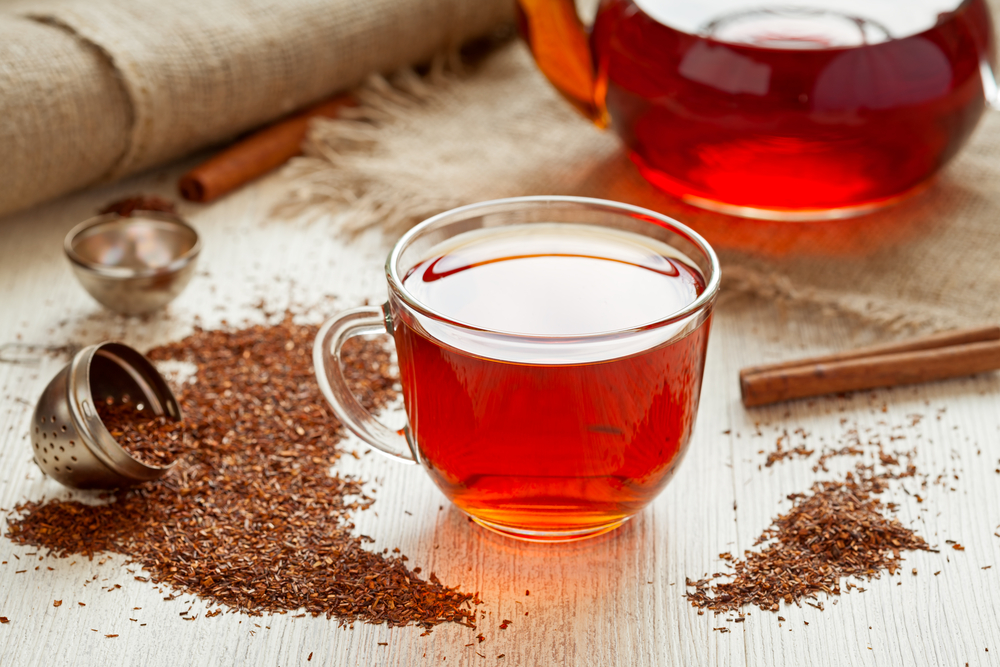
Rooibos Tea: South Africa’s Caffeine-Free Superfood
If you’re one of the billions of people who drink tea daily — and let’s be honest, if you haven’t had your morning brew yet, you probably are — you’ve probably been told to watch your caffeine intake. Green tea has it. Black tea has it. Even matcha, the trendy powdered stuff, packs a serious caffeine punch. But there’s a South African tea that gives you all the benefits of tea without a single milligram of caffeine: rooibos.
Rooibos, pronounced “roy-boss,” is a herbal tea made from the leaves of the Aspalathus linearis shrub, a plant that grows exclusively in a tiny region of the Western Cape province of South Africa. For centuries, the Khoisan people — some of the oldest indigenous inhabitants of southern Africa — have foraged wild rooibos and brewed it for its medicinal properties long before Western science had a name for any of it.
What makes rooibos particularly interesting from a health perspective isn’t just that it’s caffeine-free (though that alone makes it a great option for evening drinking or for people who are caffeine-sensitive). It’s the antioxidant profile, which is unlike any other tea on the market. A 2021 study published by the National Institutes of Health found that rooibos flavonoids significantly improved mitochondrial bioenergetics and reduced oxidative stress in human cells.
The Antioxidant Powerhouse You’ve Probably Never Heard Of
Here’s what’s unique about rooibos: it contains flavonoids that you won’t find in true tea (that’s Camellia sinensis — green tea, black tea, oolong, white tea, all from the same plant). Rooibos is what’s called an herbal tea, or “tisane,” because it comes from a completely different plant.
Three of the most studied flavonoids in rooibos are aspalathin, nothofagin, and orientin. Aspalathin, in particular, is found almost exclusively in rooibos. It’s a dihydrochalcone flavonoid that has shown remarkable effects in laboratory and animal studies, including improvements in mitochondrial function and reductions in reactive oxygen species production.
Rooibos is also rich in quercetin and luteolin, two antioxidants that have been studied for their anti-inflammatory, antiviral, and anti-allergic properties. The total polyphenol content in rooibos is higher than what you’ll find in most fruits and vegetables, making it a genuinely potent antioxidant source. If you’re interested in other antioxidant-rich foods, check out our article on the real science behind dark chocolate and health — another great source of flavonoids.
Heart Health: Blood Pressure and Cholesterol
One of the most promising areas of rooibos research involves cardiovascular health. A flavonoid called chrysoeriol, which is abundant in rooibos tea, appears to work by inhibiting angiotensin-converting enzyme (ACE) — the same pathway that many blood pressure medications target. It’s a natural ACE inhibitor, essentially.
There’s also clinical data backing this up. A 2011 human study published through Medical News Today found that subjects who consumed six cups of rooibos tea daily for six weeks showed significant improvements in their lipid profiles. LDL (“bad”) cholesterol dropped while HDL (“good”) cholesterol increased in 40 at-risk subjects. That’s real, measurable change in just six weeks from a daily cup of tea.
Aspalathin also appears to reduce vascular inflammation, which is another key factor in cardiovascular disease. Inflammation of the blood vessels is a precursor to atherosclerosis — the buildup of plaque that can lead to heart attacks and strokes. If you’re looking to support overall heart health, can complement your daily rooibos habit as part of a broader wellness strategy.
Blood Sugar and Insulin Sensitivity
Aspalathin has drawn significant research interest for its potential effects on blood sugar regulation. Several studies suggest it can improve insulin sensitivity — meaning your body uses insulin more effectively to move glucose from your bloodstream into your cells. This is relevant not just for people with type 2 diabetes, but for anyone trying to manage blood sugar levels and prevent metabolic dysfunction.
The same NIH study showed that rooibos flavonoids improved mitochondrial bioenergetics in muscle cells, which is closely tied to how efficiently your body handles glucose and fats. Better mitochondrial function means better metabolic health overall.
For anyone curious about the connection between hydration, metabolism, and weight management, our guide on water and weight loss covers the broader picture of how beverages can impact your metabolic health beyond just rooibos itself.
Rooibos Is Gentle on Your Digestive System
Here’s something a lot of tea drinkers deal with but don’t talk about: stomach irritation. True teas contain tannins, which give tea its astringent, slightly bitter taste. But tannins can also interfere with iron absorption and irritate the digestive tract, especially on an empty stomach. Rooibos is naturally very low in tannins, which means it’s much gentler on the stomach.
This also means rooibos won’t interfere with iron absorption the way other teas can. If you take iron supplements or are prone to iron deficiency, rooibos is a much safer choice than black or green tea.
Additionally, rooibos doesn’t contain oxalic acid, which is a concern for people prone to kidney stones. If you’ve been told to avoid oxalate-rich foods, rooibos is generally considered safe — a fact that makes it a great daily beverage for people with kidney stone history. For more on mineral health and dietary choices, see our post on whether pink Himalayan salt is actually better than regular table salt.
Red vs. Green Rooibos: What’s the Difference?
Rooibos comes in two main varieties, and the difference matters if you’re trying to maximize antioxidant intake:
Red rooibos is the classic, widely available version. The leaves are oxidized (fermented) after harvesting, which gives the tea its characteristic reddish-brown color and deeper, sweeter flavor. During oxidation, some of the flavonoids transform into new compounds, but overall antioxidant levels remain high.
Green rooibos is unoxidized, like green tea from Camellia sinensis. It has a lighter, more grassy flavor and retains higher levels of aspalathin because the oxidation process that breaks it down is bypassed. If you want maximum aspalathin intake, green rooibos is the way to go. But honestly, the flavor difference is subtle, and either variety is a fantastic choice.
For anyone building a healthy diet, understanding the role of protein is fundamental, and rooibos fits nicely alongside protein-rich foods as a supportive, antioxidant-dense beverage.
Side Effects and Precautions
Rooibos is generally recognized as safe for most people. The studies we’ve referenced show it’s well-tolerated even at high doses (six cups a day in the cholesterol study). But there are a few things to keep in mind:
Hormonal effects: Because rooibos contains phytoestrogens, there’s a theoretical concern about its effects on hormone-sensitive conditions. The evidence is limited, but if you have a condition like breast cancer, endometriosis, or other estrogen-sensitive issues, it’s worth discussing with your doctor before making rooibos a daily habit.
Drug interactions: As with any herbal product, rooibos could potentially interact with medications. The ACE-inhibiting effects we mentioned earlier mean it might amplify the effects of blood pressure medication. If you’re on prescription medication, a quick check with your pharmacist is always smart.
Liver and kidney concerns at very high doses: There’s some emerging research suggesting that extremely high doses of rooibos extract (far beyond what you’d get from normal tea consumption) might affect liver and kidney function in animal studies. But this is not a concern for typical tea consumption levels — you’d need to be drinking gallons of concentrated extract for this to be relevant.
Iron supplements: While rooibos’s low tannins means less interference with iron absorption compared to other teas, some sources suggest it may still bind to some iron. Take your iron supplements with a different beverage to be safe.
How to Brew Rooibos for Maximum Benefit
Brewing rooibos is straightforward. Use one teaspoon of loose leaf or one tea bag per cup of water, and steep in water just below boiling (about 95-100°C) for five to seven minutes. Unlike true teas, rooibos doesn’t get bitter if you over-steep it, so you can leave it in longer if you prefer a stronger brew.
For daily consumption, most health experts recommend two to three cups per day. This provides a steady intake of flavonoids without going to extremes. Some people drink it cold as iced tea in the summer — the flavor holds up well, and cold rooibos tea is a refreshing, caffeine-free alternative to sugary sodas.
And if you’re exploring ways to support your joints and mobility alongside your overall wellness routine, is another natural supplement worth considering.
The Bottom Line
Rooibos is one of the most underrated beverages on the planet. It’s caffeine-free, packed with unique antioxidants, supports heart health and blood sugar management, and is gentle on your digestive system. The research is promising, the safety profile is excellent, and at most grocery stores, it costs less than $2 a box.
For people who want the ritual and health benefits of tea without the caffeine, or for anyone looking to diversify their antioxidant intake, rooibos deserves a permanent spot in your kitchen. It’s been helping people for thousands of years — now science is finally catching up.
This website uses cookies to improve your experience. We'll assume you're ok with this, but you can opt-out if you wish.AcceptRejectRead More
Privacy & Cookies Policy
Privacy Overview
This website uses cookies to improve your experience while you navigate through the website. Out of these cookies, the cookies that are categorized as necessary are stored on your browser as they are essential for the working of basic functionalities of the website. We also use third-party cookies that help us analyze and understand how you use this website. These cookies will be stored in your browser only with your consent. You also have the option to opt-out of these cookies. But opting out of some of these cookies may have an effect on your browsing experience.