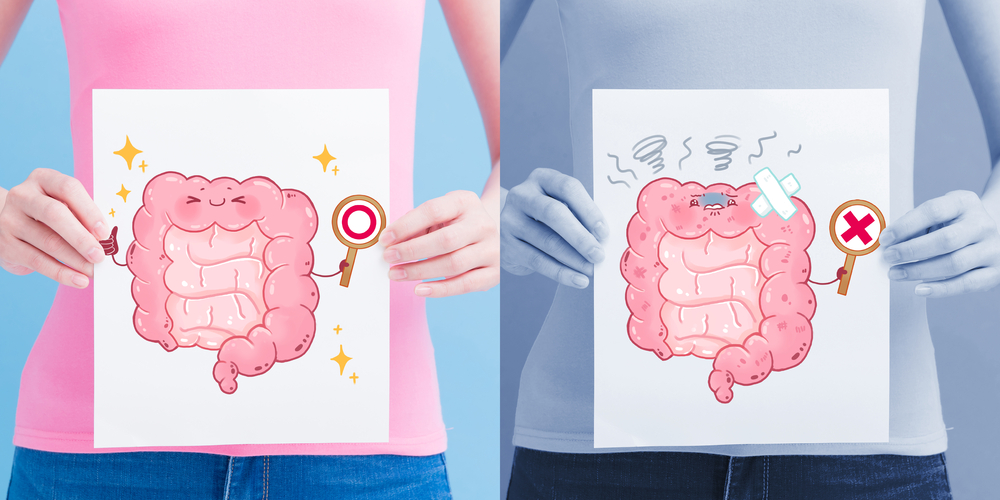
Prebiotics and probiotics work together for the good of your gut health, but they each play different roles. A healthy balanced gut can help in immune system functions. A healthy gut can also lower the symptoms or effects of conditions like depression, anxiety, autism, schizophrenia, and Alzheimer’s disease.
Prebiotics and probiotics working together can also help aid your digestion.
Probiotics
Probiotics are live bacteria that are found in certain foods or supplements. These bacteria are the good bacteria that live in your gut. Adding probiotic foods or supplements to your diet help add to the bacterial population in the gut.
Foods that contain probiotics are yogurt, sauerkraut, miso soup, kimchi, kombucha, kefir, and pickled vegetables. Probiotics are essential to help keep the gut bacteria balanced. Probiotics also help improve levels of vitamin B12, calcium, folate, iron, and zinc in healthy people.
Probiotics may also be helpful to decrease antibiotic associated diarrhea, constipation, or C-diff infections.
In some studies people have claimed that probiotics can help manage symptoms from irritable bowel syndrome, and help maintain or cause remission in ulcerative colitis. Probiotics can also help decrease the need for antibiotics in a person, help control gestational diabetes, lower the chance of yeast infections, and help decrease eczema.
Probiotics don’t stop you from getting sick, but they do boost your immune system which can help your body fight off infections easier.
Prebiotics
Prebiotics are foods that usually are high in fiber that aid the good bacteria in the gut. Think of prebiotics as the food for the good bacteria in your gut. Foods that contain prebiotics are whole grains, oats, bananas, greens, onions, garlic, soy beans, artichokes, berries, apple skins, and leeks.
Prebiotics can help enhance your digestion and your metabolism. They have also been shown to help your body absorb certain vitamins and minerals more effectively. Prebiotics can help you absorb calcium, magnesium, and iron better.
They can also help your body improve in how quickly the body processes carbohydrates. This can help lower the risk of obesity, and insulin sensitivity.
Prebiotic and Probiotic Supplements
Usually adding prebiotics and probiotics to your diet is safe to do. It is important to be careful when adding these into your diet at first. Too much of either can cause an imbalance or an overgrowth in your digestion which can cause trouble.
Overgrowth can cause symptoms such as gas, bloating, diarrhea, or constipation. Usually when first adding more prebiotic or probiotic foods to your diet, you may experience some gas. In some cases you may have a little more gastrointestinal discomfort such as diarrhea, bloating, or cramps. This isn’t very common.
There have been a few cases of people who take probiotics at it causing them to have bacteremia, fungemia, or infections. If you have Crohn’s disease you may have more severe symptoms from taking probiotics.
If you are severely immunosuppressed you should not take probiotics. Other people who should not take probiotics are people who have pancreatitis, if you have a central venous catheter, infants who have short bowel syndrome, or patients who have wounds after a major surgery.
Takeaway
It is possible to overdo or go overboard with pre or probiotics. Overdoing it on probiotics can cause bloating, gas, nausea, and diarrhea. Prebiotics are usually very safe, but can cause bloating and gas when over done.
Pre and probiotics can help aid in digestion, and boost your immune system. Having a healthy gut can be beneficial to your overall health.
Not all supplements are equal, so when thinking of adding pre and probiotics to your diet, you may want to speak with your doctor. Not all people need to add both, sometimes you may just need extra of one or the other. Taking too much can cause an overgrowth and an imbalance which can cause harm to your overall gut microbiome.
You need both prebiotics and probiotics to maintain a healthy gut. A healthy gut improves immunity and overall health! #HealthSurgeon
READ MORE: Why are Probiotics Necessary?
Sources:
https://www.optibacprobiotics.com/learning-lab/about/probiotics/when-should-i-not-take-probiotics#:~:text=However%2C%20probiotics%20are%20not%20recommended,those%20who%20are%20severely%20immunosuppressed&text=For%20those%20who%20have%20pancreatitis&text=For%20patients%20who%20are%20in%20the%20ICU
https://www.mayoclinic.org/healthy-lifestyle/nutrition-and-healthy-eating/expert-answers/probiotics/faq-20058065#:~:text=Probiotics%20are%20foods%20or%20supplements,as%20food%20for%20human%20microflora.
https://intermountainhealthcare.org/blogs/difference-between-probiotics-and-prebiotics
https://www.healthline.com/nutrition/probiotics-and-prebiotics#bottom-line
https://www.jeffersonhealth.org/your-health/living-well/prebiotics-versus-probiotics-for-gut-health
https://www.health.com/probiotic-vs-prebiotic-7567907
https://www.medicalnewstoday.com/articles/323490#takeaway