Have you ever wondered what happens to your food after you take a bite? Understanding how food is digested can help you make smarter nutrition choices, improve gut health, and better manage common digestive issues like bloating or indigestion.
Digestion is a complex but highly coordinated process that transforms the food you eat into nutrients your body can absorb and use for energy, growth, and repair. From your mouth to your intestines, every organ in your digestive system plays a critical role.
In this comprehensive guide, we’ll walk through the entire digestive process step by step.
What Is Digestion?
Digestion is the process by which your body breaks down food into smaller components that can be absorbed into the bloodstream. These nutrients — including carbohydrates, proteins, fats, vitamins, and minerals — fuel every cell in your body.
There are two main types of digestion:
- Mechanical digestion: Physical breakdown of food (chewing and stomach churning)
- Chemical digestion: Breakdown of food using enzymes and acids
Both processes work together to extract nutrients efficiently.
Step 1: Digestion Begins in the Mouth
Digestion starts the moment food enters your mouth.
Mechanical Breakdown
Your teeth chew food into smaller pieces, increasing surface area so digestive enzymes can work more effectively. This process is called mastication.
Saliva and Enzymes
Your salivary glands produce saliva, which contains an enzyme called amylase. Amylase begins breaking down carbohydrates (starches) into simpler sugars.
Saliva also:
- Moistens food
- Makes it easier to swallow
- Begins chemical digestion
Once food is chewed and mixed with saliva, it forms a soft mass called a bolus, which is swallowed.
Step 2: The Esophagus Moves Food to the Stomach
After swallowing, food travels down the esophagus, a muscular tube connecting the mouth to the stomach.
Food moves through the esophagus by peristalsis, which is a series of wave-like muscle contractions. These contractions push the bolus downward into the stomach.
At the bottom of the esophagus, a ring of muscle called the lower esophageal sphincter (LES) opens to allow food into the stomach and then closes to prevent acid reflux.
Step 3: The Stomach Breaks Food Down Further
The stomach plays a crucial role in both mechanical and chemical digestion.
Mechanical Digestion
The stomach muscles contract and churn food, mixing it with digestive juices.
Chemical Digestion
The stomach produces:
- Hydrochloric acid (HCl): Creates an acidic environment to break down food and kill harmful bacteria.
- Pepsin: An enzyme that breaks down proteins into smaller peptides.
The acidic environment also activates digestive enzymes and helps dissolve food particles.
After several hours of churning and digestion, the food becomes a semi-liquid mixture called chyme.
Step 4: The Small Intestine — Where Most Nutrient Absorption Happens
The small intestine is the primary site of nutrient absorption. It is about 20 feet long and divided into three sections:
- Duodenum
- Jejunum
- Ileum
The Duodenum
In the duodenum, chyme mixes with digestive juices from the pancreas and bile from the liver.
- Pancreatic enzymes break down carbohydrates, proteins, and fats.
- Bile, produced by the liver and stored in the gallbladder, helps digest fats by breaking them into smaller droplets.
The Jejunum and Ileum
These sections absorb nutrients through tiny finger-like projections called villi and even smaller structures called microvilli.
These structures dramatically increase surface area, allowing efficient absorption of:
- Glucose (from carbohydrates)
- Amino acids (from proteins)
- Fatty acids (from fats)
- Vitamins and minerals
Absorbed nutrients enter the bloodstream and are transported to the liver for processing.
Step 5: The Role of the Liver, Gallbladder, and Pancreas
Although food doesn’t pass directly through these organs, they are essential for digestion.
The liver produces bile, which helps break down fats. It also processes and stores nutrients absorbed from the small intestine.
The gallbladder stores and releases bile when fatty foods enter the small intestine.
The pancreas produces digestive enzymes that break down:
- Carbohydrates into simple sugars
- Proteins into amino acids
- Fats into fatty acids and glycerol
It also produces bicarbonate to neutralize stomach acid entering the small intestine.
Step 6: The Large Intestine (Colon)
After most nutrients are absorbed, the remaining material enters the large intestine.
The large intestine’s primary functions are:
- Absorbing water
- Absorbing electrolytes
- Forming and storing stool
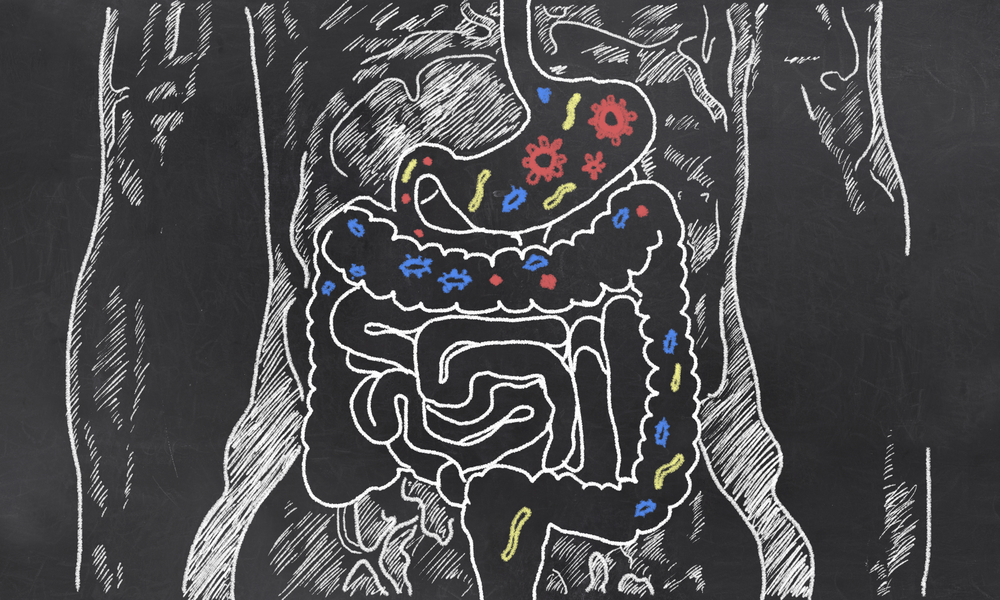
It also houses trillions of beneficial bacteria collectively known as the gut microbiome.
The Role of Gut Bacteria in Digestion
Gut bacteria play an important role in:
- Fermenting undigested carbohydrates
- Producing certain vitamins (like vitamin K and some B vitamins)
- Supporting immune health
When gut bacteria ferment fiber, they produce short-chain fatty acids that support colon health.
An imbalance in gut bacteria may contribute to bloating, gas, or digestive discomfort.
Step 7: Elimination
The final stage of digestion is elimination.
Waste material is stored in the rectum until it is expelled through the anus during a bowel movement.
Regular elimination is important for digestive health and overall well-being.
How Long Does Digestion Take?
The full digestive process typically takes:
- 24 to 72 hours
However, timing varies depending on:
- Type of food eaten
- Individual metabolism
- Hydration
- Activity level
- Gut health
Carbohydrates digest more quickly than proteins and fats, while high-fat meals may take longer to process.
How Different Nutrients Are Digested
Carbohydrates
Begin digestion in the mouth with amylase. Most absorption occurs in the small intestine as glucose.
Proteins
Begin digestion in the stomach with pepsin. Broken into amino acids in the small intestine.
Fats
Primarily digested in the small intestine with help from bile and pancreatic enzymes.
Common Digestive Issues
When digestion doesn’t function smoothly, symptoms may include:
- Bloating
- Gas
- Constipation
- Diarrhea
- Acid reflux
- Abdominal pain
Diet, hydration, stress, and physical activity all influence digestive health.
Tips to Support Healthy Digestion
You can improve digestion by:
- Eating slowly and chewing thoroughly
- Staying hydrated
- Eating fiber-rich foods
- Including probiotic foods like yogurt or kefir
- Managing stress
- Exercising regularly
Small daily habits can significantly impact how efficiently your digestive system works.
The Bottom Line: How Is Food Digested?
Digestion is a complex process that begins in the mouth and continues through the esophagus, stomach, small intestine, and large intestine. Along the way, enzymes, acids, bile, and beneficial bacteria work together to break down food and absorb nutrients.
Understanding how food is digested highlights the importance of balanced meals, proper hydration, and mindful eating habits.
When your digestive system functions properly, your body receives the nutrients it needs to thrive — supporting energy levels, immune health, and overall wellness.
Sources:
https://www.niddk.nih.gov/health-information/digestive-diseases/digestive-system-how-it-works
https://www.mayoclinic.org/diseases-conditions/indigestion/expert-answers/digestive-system/faq-20058340
https://www.hopkinsmedicine.org/health/conditions-and-diseases/the-digestive-process-what-is-the-role-of-your-pancreas-in-digestion