HealthSurgeon - Healthy Living and Fitness - Purium Coupon
Primary Navigation Menu
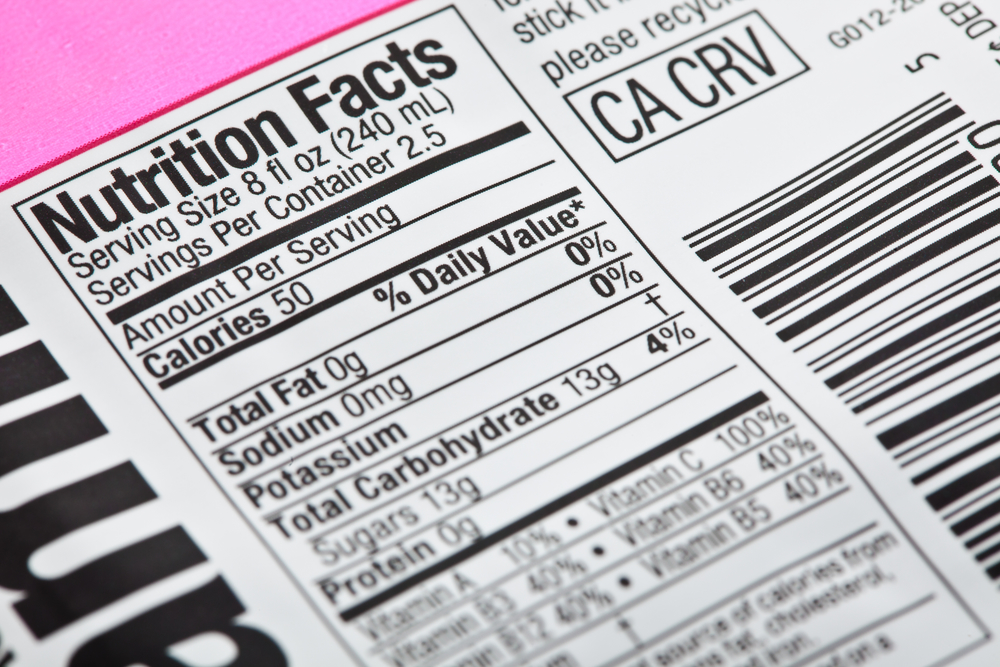
Daily Value on the New Nutrition Facts Label — What It Actually Means
The Nutrition Facts Label, Explained: Understanding Daily Value
Walk into any grocery store and you’ll see thousands of products with nutrition labels staring back at you. But how much do you really understand about that %DV number on the right side? The one that seems to say something about whether a food is good or bad — but not exactly what?
Today, let’s break it down.
What Is Daily Value?
Daily Value — abbreviated as DV — is a set of reference amounts established by the FDA for different nutrients. Think of it as a standardized ruler. Every nutrition label on every product uses the same benchmark: what a typical adult needs in a 2,000-calorie day.
The idea is simple. Instead of comparing mg of sodium or mcg of vitamin D from product to product (which is confusing), the label gives you a percentage. That’s the Daily Value percentage — %DV.
The 5/20 Rule
This is the most useful thing to memorize about the nutrition label:
5% DV or less per serving = low
20% DV or more per serving = high
That’s it. Traffic light logic. If you’re trying to limit a nutrient (like sodium, saturated fat, or added sugars), aim for the 5% or below. If you want more of a nutrient (like fiber, vitamin D, calcium, iron, or potassium), look for the 20% or above.
It sounds too simple to be useful, but most people I talk about this with are genuinely surprised. It’s that simple — and most people don’t use it.
What Changed on the New Label (2020)
The FDA updated the nutrition label in 2020 with some significant changes. Here’s what you need to know:
Added sugars — now listed separately. This was huge. Before, added sugars were hidden somewhere in total carbohydrates. Now they’re called out directly. The recommended limit is 10% of your daily calories from added sugars — roughly 50 grams on a 2,000-calorie diet.
Vitamin D and potassium replaced vitamins A and C. Why? Because research showed that most Americans aren’t deficient in vitamins A and C anymore, but many are low in vitamin D and potassium.
Calorie calculations were updated. The FDA adjusted the math for how calories are measured — some foods showed fewer calories after the update, some showed more.
Larger, bolder font. The calorie count and serving size are now the most prominent information on the label. Because those are often the two things people get wrong.
Serving sizes reflect reality. The old label said a serving of chips was 1 oz (28 grams). Everyone knew that was wrong — most people eat more like 3 oz in one sitting. The new labels adjusted to what people actually eat.
How to Actually Use %DV on the Shopping Aisle
Here’s where most people go wrong: they look at one product and judge it without thinking about what they’re eating all day. The %DV is meant to be cumulative — you’re building your daily intake from multiple foods.
So instead of panicking if a snack has 15% of your sodium DV, ask yourself: what else did I eat today? If breakfast already had 30% sodium DV and lunch had 40%, that 15% snack starts to make more sense. It’s about the total, not each individual item.
For the nutrients you want to maximize (fiber, vitamin D, calcium, iron, potassium), try to hit 20% DV or more per serving. For the ones you want to limit (sodium, saturated fat, added sugars), aim for 5% DV or less per serving.
Decoding Common Nutrition Claims
Marketing on packaging often uses specific terms that actually have regulatory definitions. Here are some of the most common:
“Low sodium” means 140 mg or less per serving
“High fiber” means 20% DV or more of fiber per serving
“Light” has specific definitions — it usually means 50% fewer calories or 50% less fat than the regular version
“Good source of” means 10–19% DV per serving
“Excellent source of” means 20% DV or more per serving
These aren’t just marketing fluff — they’re legal definitions. If a product claims “high fiber,” it has to have at least 20% of your daily fiber DV per serving.
The Bottom Line
The %DV on the nutrition label is a quick-reference tool. It’s not the whole story — it’s based on a 2,000-calorie diet, and your needs might be higher or lower. It doesn’t account for things like the quality of the food or how your body responds to it.
But as a fast, practical filter while shopping? It’s one of the best tools we have. Learn the 5/20 rule, look at cumulative %DV across your meals, and don’t get paralyzed by looking at one nutrient in isolation.
If you want a practical way to boost key nutrients like potassium, vitamin D, and fiber, you might try
— it’s a greens powder with added potassium, vitamin D, and other micronutrients that many people struggle to get enough of. For fiber and fruit-based nutrition,
This website uses cookies to improve your experience. We'll assume you're ok with this, but you can opt-out if you wish.AcceptRejectRead More
Privacy & Cookies Policy
Privacy Overview
This website uses cookies to improve your experience while you navigate through the website. Out of these cookies, the cookies that are categorized as necessary are stored on your browser as they are essential for the working of basic functionalities of the website. We also use third-party cookies that help us analyze and understand how you use this website. These cookies will be stored in your browser only with your consent. You also have the option to opt-out of these cookies. But opting out of some of these cookies may have an effect on your browsing experience.