HealthSurgeon - Healthy Living and Fitness - Purium Coupon
Primary Navigation Menu
Grip Strength Matters — What Science Says About Powerball Gyroscopes
Grip Strength Matters — Here’s What Science Actually Says About Powerball Gyroscopes
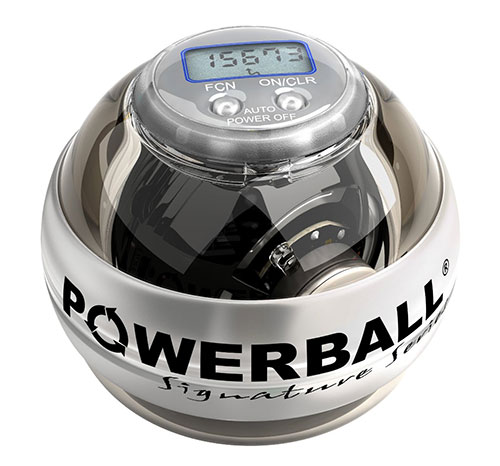
If you’ve seen those spinning exercise devices in sports shops or fitness catalogs, you’ve probably wondered whether they actually do anything beyond looking cool. The Powerball Signature Pro — a hand-held gyroscope that spins up to 16,000 RPM — has been around for decades, but the science behind it is surprisingly solid.
This isn’t magic. It’s physics and physiology working together, backed by peer-reviewed research. And for anyone looking to build forearm strength, improve grip, or add low-impact exercise to their routine, it’s worth understanding what it can and can’t do.
How It Actually Works
The Powerball uses centrifugal force and angular momentum. As you hold the device and make small circular motions with your wrist, the internal wheel accelerates to high speeds. The resistance you feel isn’t from a motor — it’s from your own muscles fighting the gyroscopic force. That’s what builds strength.
According to research published in the Journal of Clinical Medicine, grip strength training devices like hand gyros significantly improve forearm muscle activation. The study measured electromyographic activity in forearm muscles during gyroscopic exercises and found meaningful engagement of both flexor and extensor groups.
Grip Strength Is a Real Health Marker
Here’s the part that matters beyond just strong forearms: grip strength is a validated predictor of overall health. A landmark study in The Lancet — analyzing data from over 100,000 adults across 17 countries — found that grip strength was strongly associated with cardiovascular disease and all-cause mortality. Lower grip strength predicted higher risk, independent of other factors like age or fitness level.
For people who sit at desks all day or haven’t done hand-focused strength work, a Powerball can be a practical tool to build grip progressively. Unlike heavy dumbbells, it requires no gym membership, creates minimal joint impact, and fits on a desk.
What the Research Shows
A 2025 study in Clinical Biomechanics examined wrist and forearm muscle activity during gyroscopic exercises across different resistance levels. The findings were clear: higher RPM creates greater muscle activation, particularly in the wrist flexors and forearm pronators. However, the study also noted diminishing returns past a certain intensity — proper form matters more than raw power.
The evidence points to a few key takeaways:
Forearm strength — consistent use builds both flexor and extensor muscles, not just one side
Grip endurance — sustained spinning improves fatigue resistance in hand and forearm muscles
Wrist stability — the small, controlled motions enhance proprioception and joint coordination
Low joint impact — no heavy loading means less wear on joints compared to traditional grip training
How to Use It (So It Actually Works)
The most common mistake people make is rushing to maximum speed. Start with a lower-resistance model or use the starting cord to get the wheel spinning, then gradually transition to active wrist motion. Warm up your wrists for 1-2 minutes before starting.
Here’s a practical protocol:
Begin with 2-3 minute sessions, 3-4 times per day
Use a slow, controlled circular motion — small circles at the wrist, not big arm swings
Alternate hands to maintain balance
Gradually increase duration as comfort and strength improve
Stop if you feel sharp pain (general fatigue is normal; pain is not)
Hand grippers and wrist curl weights each have their place. Grippers are great for pure crushing grip (useful for things like opening jars or rock climbing). Wrist weights target specific muscle groups through traditional resistance training. The Powerball sits between them — it builds grip endurance and forearm strength with a unique combination of cardio and isometric effort.
Many athletes use Powerball devices as part of their warm-up routine. Tennis players, rock climbers, and musicians find the small, continuous motions improve blood flow and prepare the hands for sustained activity.
Things to Keep in Mind
It won’t replace a comprehensive strength training program. It won’t build large muscles. It’s not a miracle cure for tennis elbow or carpal tunnel (though some users report symptomatic relief — the evidence is anecdotal, not clinical).
But as a tool for building functional grip strength, improving forearm conditioning, and adding movement into a sedentary day? The evidence supports it. And it’s one of the simplest pieces of equipment you can use.
For muscle recovery and proper nutrition to support your training, consider fresh fruit and vegetable juice for natural anti-inflammatory support.
This website uses cookies to improve your experience. We'll assume you're ok with this, but you can opt-out if you wish.AcceptRejectRead More
Privacy & Cookies Policy
Privacy Overview
This website uses cookies to improve your experience while you navigate through the website. Out of these cookies, the cookies that are categorized as necessary are stored on your browser as they are essential for the working of basic functionalities of the website. We also use third-party cookies that help us analyze and understand how you use this website. These cookies will be stored in your browser only with your consent. You also have the option to opt-out of these cookies. But opting out of some of these cookies may have an effect on your browsing experience.