HealthSurgeon - Healthy Living and Fitness - Purium Coupon
Primary Navigation Menu
Vitamin B12 Explained: Benefits, Deficiency Signs, Food Sources, and Why You Need It
Vitamin B12, also known as cobalamin, is one of the most essential nutrients your body needs but cannot produce on its own. It plays a critical role in energy production, red blood cell formation, DNA synthesis, and neurological function. Yet, many people do not get enough, leading to deficiencies that can impact energy, mood, and long-term health.
In this complete guide, you will learn:
What Vitamin B12 is and how it works in the body
Health benefits of Vitamin B12
Deficiency symptoms to watch for
The best dietary sources of Vitamin B12
Recommended intake and who may need supplements
What Is Vitamin B12?
Vitamin B12 is a water-soluble vitamin that helps keep your body’s nerve and blood cells healthy and is essential for making DNA, the genetic material in all cells. It also helps prevent megaloblastic anemia, a condition that causes fatigue and weakness.
B12 is unique among vitamins:
It contains cobalt, which is why compounds with B12 activity are called cobalamins.
It is only found naturally in animal-based foods or fortified products, making it challenging for individuals on plant-based diets to obtain adequate levels without supplementation.
Health Benefits of Vitamin B12
Supports Red Blood Cell Formation and Prevents Anemia
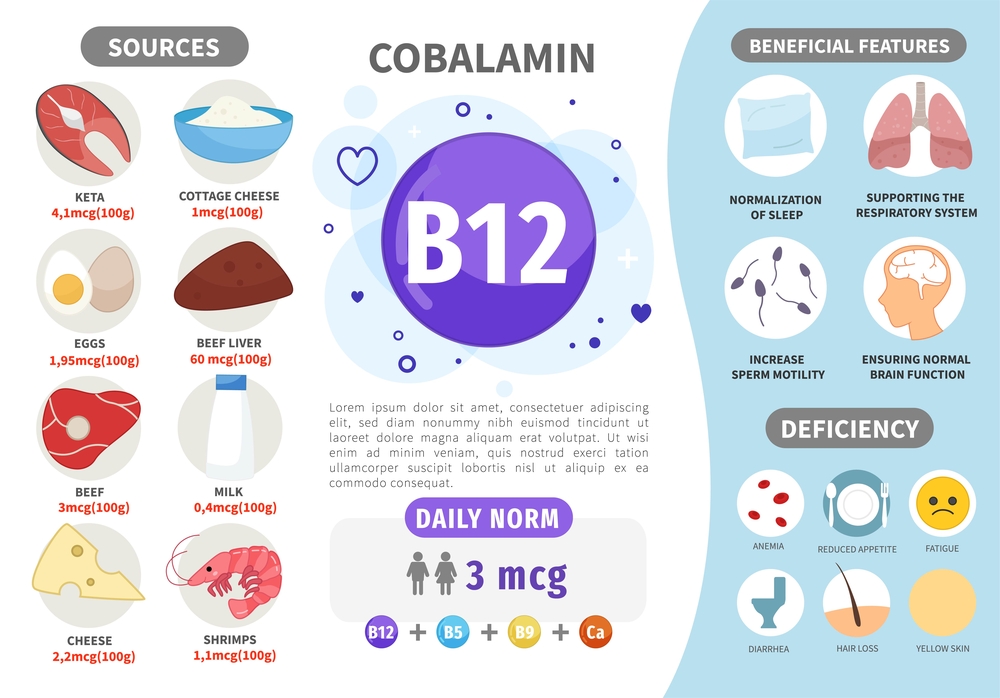
Vitamin B12 plays a key role in helping your body produce healthy red blood cells. Low B12 levels cause red blood cells to become larger and oval-shaped (megaloblastic anemia) instead of small and round, making them unable to move from the bone marrow into the bloodstream efficiently, leading to fatigue and weakness.
Supports Energy Production
Although B12 does not directly provide energy, it is crucial for energy metabolism as it helps convert carbohydrates into glucose, which the body uses for energy.
Supports Brain Health and Mood Regulation
Vitamin B12 is vital for neurological function, supporting the production of serotonin and dopamine, which help regulate mood. Deficiency may increase the risk of depression and cognitive decline.
May Support Heart Health
Vitamin B12 helps lower homocysteine levels, a type of amino acid linked to an increased risk of heart disease when elevated.
Supports Healthy Pregnancy
Adequate B12 levels are critical for a healthy pregnancy, as low B12 levels may contribute to neural tube defects and could lead to miscarriage or premature birth.
Signs and Symptoms of Vitamin B12 Deficiency
Vitamin B12 deficiency can develop gradually, and its symptoms can be mistaken for other health conditions. Common signs include:
Fatigue and weakness
Pale or jaundiced skin
Heart palpitations and shortness of breath
Nerve problems such as numbness or tingling
Muscle weakness and difficulty walking
Vision loss
Mood changes, depression, and memory problems
Glossitis (swollen, inflamed tongue) and mouth ulcers
Long-term deficiency can lead to irreversible nerve damage, making early detection and correction crucial.
Who Is at Risk of Vitamin B12 Deficiency?
Certain groups are more prone to Vitamin B12 deficiency, including:
Older adults (due to decreased stomach acid production)
People with gastrointestinal disorders (Crohn’s, celiac disease)
Those who have undergone gastrointestinal surgery (weight loss surgery)
Strict vegetarians and vegans (as B12 is found primarily in animal products)
Individuals taking certain medications, such as metformin or proton pump inhibitors
Since B12 is water-soluble, excess amounts are excreted through urine, but maintaining adequate daily intake is essential for overall health.
Best Food Sources of Vitamin B12
Vitamin B12 is found naturally in animal products and fortified foods. Good sources include:
Meat (beef, liver, chicken)
Fish and seafood (salmon, tuna, clams, trout)
Dairy products (milk, cheese, yogurt)
Eggs
Fortified cereals and nutritional yeast (excellent sources for vegetarians and vegans)
Vitamin B12 Supplements: Do You Need Them?
If you cannot meet your B12 needs through diet alone or are at risk of deficiency, supplementation may be beneficial. B12 supplements come in several forms:
Oral tablets
Sublingual tablets (dissolved under the tongue)
Nasal sprays
Injections (used for severe deficiencies)
B12 supplements are generally considered safe, even at higher doses, as the body excretes what it does not need. However, it is essential to follow your healthcare provider’s recommendations, particularly if you have a diagnosed deficiency or underlying health conditions.
Can You Take Too Much Vitamin B12?
Vitamin B12 has a low potential for toxicity, and no Tolerable Upper Intake Level (UL) has been established due to its water-solubility. However, very high doses may cause mild side effects in rare cases, such as acne or rosacea. Always follow appropriate dosage guidance.
Vitamin B12 (cobalamin) is vital for red blood cell formation, DNA synthesis, neurological health, and energy production.
Deficiency is common, especially among older adults, vegetarians, and individuals with gastrointestinal disorders.
Symptoms of deficiency include fatigue, weakness, nerve issues, and mood changes.
B12 is found primarily in animal products, with fortified foods and supplements available for those at risk of deficiency.
Ensuring adequate Vitamin B12 intake is essential for maintaining energy, cognitive function, and overall vitality. If you suspect you may have a deficiency or fall into a high-risk category, consult your healthcare provider for testing and personalized guidance.
This website uses cookies to improve your experience. We'll assume you're ok with this, but you can opt-out if you wish.AcceptRejectRead More
Privacy & Cookies Policy
Privacy Overview
This website uses cookies to improve your experience while you navigate through the website. Out of these cookies, the cookies that are categorized as necessary are stored on your browser as they are essential for the working of basic functionalities of the website. We also use third-party cookies that help us analyze and understand how you use this website. These cookies will be stored in your browser only with your consent. You also have the option to opt-out of these cookies. But opting out of some of these cookies may have an effect on your browsing experience.