HealthSurgeon - Healthy Living and Fitness - Purium Coupon
Primary Navigation Menu
Single-Leg Exercises: Why Training on One Foot Improves Strength, Balance, and Injury Prevention
Single-footed (single-leg) exercises look simple—until you try them. The moment you shift your bodyweight onto one foot, your muscles stop “sharing the work,” your balance system lights up, and small weaknesses you never noticed become obvious. That’s exactly why single-footed training is so valuable. Whether your goal is better athletic performance, fewer aches and pains, healthier knees and hips, or simply more confidence walking up stairs as you age, single-footed exercises are one of the highest-return tools you can add to your routine.
This article explores why single-footed exercises matter, what they train that traditional two-legged exercises often miss, how they help prevent injury, and how to start safely.
What are single-footed exercises?
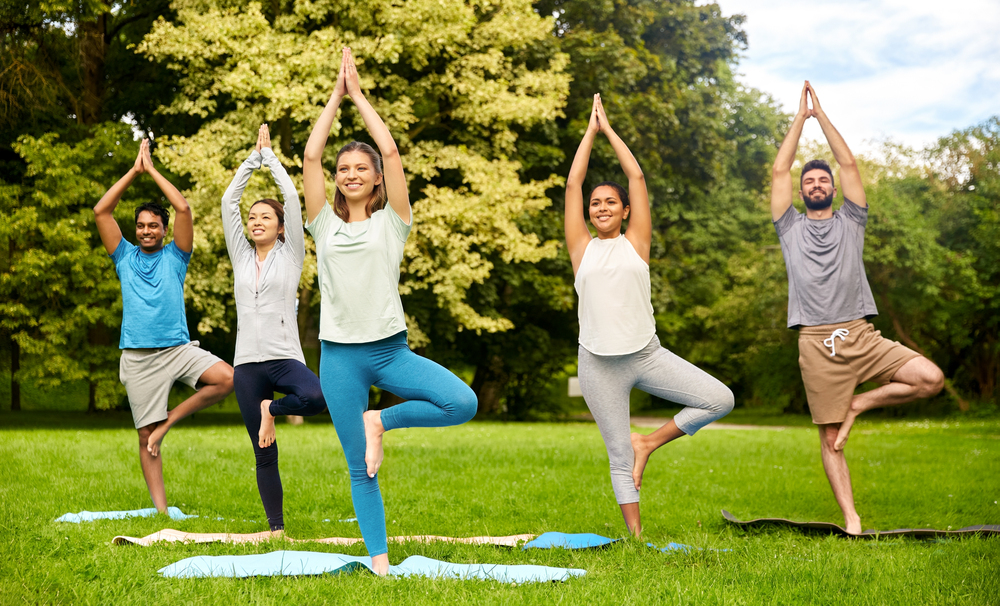
Single-footed exercises are movements where most or all of your weight is supported by one foot at a time. Some examples include:
Some are true one-foot supports; others (like split squats) are “mostly one-leg” because the front leg does the majority of the work.
Why Single-Footed Training is Uniquely Important
Most human movement is essentially a series of controlled single-leg positions. Walking, running, climbing stairs, jumping, changing direction—these are all built on brief moments where your body is supported by one leg while the other leg swings through space. Your ability to own those moments determines how smooth, powerful, and safe your movement is.
1) Single-Footed Exercises Expose and Fix Imbalances
Most people have natural left-right differences from sports, jobs, driving habits, old injuries, or simply dominance (like being right-handed). Over time, these imbalances can contribute to pain or repeated tweaks.
Single-footed work:
forces each leg to contribute meaningfully
highlights stability gaps (wobbling, knee collapsing inward, hip dropping)
helps you strengthen the weaker side without the stronger side “covering” for it
That doesn’t mean your legs must become perfectly symmetrical. It means you reduce the kind of imbalance that creates joint irritation and poor mechanics.
2) They Train Balance—Specifically the Kind You Actually Use
Balance isn’t just standing still on one foot. Real-life balance is dynamic: you’re stabilizing while moving, reacting, and changing direction. Single-footed exercises train the sensory system that keeps you upright:
proprioception (your body’s position sense)
foot and ankle reflexes
hip stabilizers that keep your pelvis level
core control that prevents twisting or collapsing
This matters for athletes and non-athletes alike. Better balance isn’t only about “not falling.” It’s about moving confidently and efficiently.
3) They Build Hip Stability and Protect the Knees
A huge part of knee health comes from what happens above and below the knee: hip control and foot/ankle control. When you load one leg, your glute medius and other hip stabilizers must prevent:
the knee collapsing inward (valgus)
the pelvis dropping on the unsupported side
the torso rotating or leaning excessively
This is why single-footed training is commonly used in rehab and injury prevention programs, especially for:
ACL injury risk reduction
runner’s knee (patellofemoral pain)
iliotibial band irritation
hip and low-back overuse issues
The goal is not “perfect form for Instagram.” It’s a body that can keep joints aligned under real-world forces.
4) They Strengthen the Feet and Ankles (often a missing link)
Feet are your foundation. If your foot collapses, the rest of your leg tends to follow. Single-footed training develops the smaller support muscles that many people never train directly:
arch support muscles
ankle stabilizers
toe flexors/extensors
calf and shin coordination
Over time, a stronger, more responsive foot can make everything feel better: squats, runs, hikes, even standing at work.
5) They Transfer to Sports and Everyday Life
Single-footed exercises have great “carryover” because they resemble how you move outside the gym. Consider:
You don’t need an entire workout of single-leg training. For most people:
2–3 days per week is plenty
2–4 exercises per session
2–4 sets each
moderate reps (6–12) for strength, higher (12–20) for control/endurance
You can also use short daily “micro-doses” for balance: 1–2 minutes total while brushing your teeth or waiting for coffee.
Who benefits most?
Nearly everyone, but especially:
runners and field/court athletes
people rehabbing knee, hip, or ankle issues
anyone with frequent ankle sprains
older adults wanting to reduce fall risk
people who sit a lot and feel “glute sleepy”
anyone who feels unstable on stairs
When to be Cautious
If you have acute injury, significant pain, uncontrolled dizziness, or severe balance impairment, start with support and consider working with a physical therapist or qualified trainer. Pain is not a badge of progress—single-footed work should feel challenging, not sharp or threatening.
The Takeaway
Single-footed exercises matter because they train the strength and stability you actually use in real life. They reveal imbalances, strengthen hips/feet/ankles, protect knees, and build the kind of balance that keeps you moving confidently—whether you’re chasing performance goals or simply trying to feel steady on your feet.
This website uses cookies to improve your experience. We'll assume you're ok with this, but you can opt-out if you wish.AcceptRejectRead More
Privacy & Cookies Policy
Privacy Overview
This website uses cookies to improve your experience while you navigate through the website. Out of these cookies, the cookies that are categorized as necessary are stored on your browser as they are essential for the working of basic functionalities of the website. We also use third-party cookies that help us analyze and understand how you use this website. These cookies will be stored in your browser only with your consent. You also have the option to opt-out of these cookies. But opting out of some of these cookies may have an effect on your browsing experience.