HealthSurgeon - Healthy Living and Fitness - Purium Coupon
Primary Navigation Menu
Start Your Day with a Faster Metabolism
## Start Your Day with a Faster Metabolism
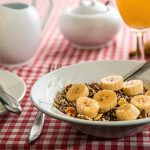
You’ve probably heard it a dozen times: breakfast is the most important meal of the day. But here’s why that advice actually matters for your metabolism, not just your hunger.
Your body is never truly at rest — even while you sleep, it burns calories to keep your heart beating, your brain active, and your cells repaired. This baseline calorie burn is called your Basal Metabolic Rate, or BMR. According to Cleveland Clinic, BMR accounts for roughly 60 to 75 percent of your total daily energy expenditure, which means the choices you make in the first few hours after waking can set your calorie-burning engine for the rest of the day.
### Why Your Metabolism Slows (and What You Can Do About It)
After age 30, metabolism typically drops by one to two percent per decade. The culprit isn’t aging itself — it’s muscle loss. Muscle tissue burns far more calories at rest than fat tissue does, so as we lose lean mass over the years, our resting metabolic rate follows.
Calorie restriction can backfire in ways most people don’t expect. When you drastically cut calories, your body interprets it as a famine and downshifts energy expenditure to conserve fuel. That’s why extreme dieting often leads to plateaus and rebound weight gain. Harvard Health emphasizes that sustainable approaches — adequate protein, nutrient density, consistent movement — outperform crash diets every time.
Poor sleep disrupts the hunger hormones ghrelin and leptin, throwing off both your appetite and metabolic efficiency. Even mild dehydration can temporarily slow metabolism by as much as 24 to 30 percent. These factors aren’t glamorous, but they matter far more than any “metabolism-boosting” supplement.
### The Morning Metabolism Window
Your body uses more energy to digest, absorb, and process food than it does to sit idle. This effect — diet-induced thermogenesis, or DIT — is naturally stronger in the morning, and protein is the macronutrient that triggers the biggest thermic response. A high-protein breakfast doesn’t just keep you full longer; it literally increases how many calories you burn in the hours that follow.
Here are the morning habits with the strongest evidence for supporting an active metabolism:
**Start with protein.** Aim for at least 20 to 30 grams within the first hour of waking. Eggs, Greek yogurt, or a quality protein shake all work well. A complete meal replacement like can handle both protein and micronutrient needs when you’re short on time.
**Hydrate immediately.** Drink 16 to 20 ounces of water before coffee. Research shows that rehydrating after sleep can increase resting energy expenditure by 24 to 30 percent for about an hour.
**Move your body.** You don’t need an intense gym session. Even a brisk 20-minute walk, some bodyweight squats, or gentle stretching raises your metabolic rate for hours. See [7 Ways to Boost Body Metabolism](https://healthsurgeon.com/weightloss/boost-metabolism-burn-fat-quickly-lose-weight-fast/) for more movement ideas.
**Fill your plate with greens.** Nutrient-dense vegetables provide the vitamins and minerals that support cellular energy production. If you struggle to eat enough produce,
delivers a concentrated dose of chlorophyll-rich nutrients alongside your morning routine.
### What Actually Works (and What Doesn’t)
The evidence is clear: strength training is the single most effective long-term strategy for raising your resting metabolic rate. More muscle means more calories burned — including while you sleep. For additional strategies that complement exercise, check out [Fresh Fruit and Vegetable Juice to Lose Weight Fast](https://healthsurgeon.com/weightloss/fresh-fruit-and-vegetable-juice-to-lose-weight-fast/).
Here’s what the research says *doesn’t* work: the popular advice to eat six small meals per day. Studies show meal frequency has minimal impact on metabolism compared to total calorie intake and meal quality. Focus on whole foods, adequate protein, and nutrient density instead.
Also, skip the metabolism supplements. Very few over-the-counter “fat burners” have solid clinical evidence, and many come with unwanted side effects like jitteriness or elevated heart rate.
### Making It Practical
If your mornings are rushed (and who aren’t?), a complete meal replacement can be a genuinely smart shortcut. Look for options that include protein, fiber, and healthy fats — not just empty calories. See [5 Healthy Eating Diet Tips to Lose 5kg in 30 Days Fast](https://healthsurgeon.com/weightloss/5-healthy-eating-diet-tips-lose-5kg-in-30-days-fast/) for practical meal planning.
Tracking your baseline helps, too. Tools like the [Calories Burned Calculator](https://healthsurgeon.com/fitness/calories-burned-calculator/) and [Body Fat Percentage Calculator](https://healthsurgeon.com/fitness/body-fat-percentage-calculator/) give you objective numbers to monitor over time. For a deeper dive into metabolic health, see [Improving Your Metabolism](https://healthsurgeon.com/health/improving-metabolism/).
Bottom line: you can’t change your age or your genetics. But you can control what you eat first thing in the morning, how much water you drink, and whether you move your body. These are the habits that actually move the needle.
This website uses cookies to improve your experience. We'll assume you're ok with this, but you can opt-out if you wish.AcceptRejectRead More
Privacy & Cookies Policy
Privacy Overview
This website uses cookies to improve your experience while you navigate through the website. Out of these cookies, the cookies that are categorized as necessary are stored on your browser as they are essential for the working of basic functionalities of the website. We also use third-party cookies that help us analyze and understand how you use this website. These cookies will be stored in your browser only with your consent. You also have the option to opt-out of these cookies. But opting out of some of these cookies may have an effect on your browsing experience.