
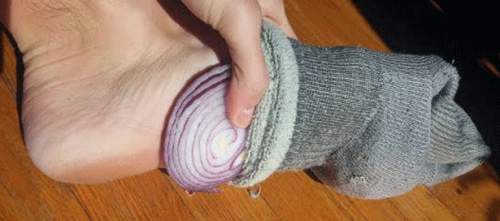
Onion in Your Feet: The Viral Remedy That Doesn’t Work (But Onions Do)
Here’s a claim that’s been floating around family group chats and wellness forums for years: tape a slice of onion to your feet overnight, and the “7,000 nerve endings” in your soles will draw out toxins and cure your cold. It’s the sort of thing that sounds so specific it must be true, right? Here’s the thing — it isn’t.
Skin is a pretty effective barrier. It does absorb water and certain small oil-soluble molecules — which is how topical medicines are designed to work. But the sulfur compounds and flavonoids in onions don’t come through that way in any meaningful quantity. And nerve endings? They send sensation signals to your brain. They’re not nutrient delivery channels. Your feet aren’t little suction cups for viruses.
That’s not to say onions are worthless. They’re genuinely one of the more useful foods in the kitchen — you just have to eat them. Mayo Clinic points out that onions carry quercetin, a flavonoid linked with antioxidant and anti-inflammatory activity, along with vitamin C and sulfur compounds that give them their sharp flavor. The NIH’s NCCIH also reminds us that most natural remedies marketed for colds simply haven’t been proven to work — and onions applied to skin are squarely in that unproven category.
What Actually Helps When You’re Under the Weather
For a cold, the evidence points to the boring classics: fluids, rest, and honey if you’ve got a cough. No onion involved. Where diet genuinely helps is in the background — the Mediterranean-style pattern of plenty of vegetables, fruits, legumes, and herbs like garlic and onion cooked into soups and stir-fries. It’s the kind of anti-inflammatory nutrition that builds up over months, not a single taped-on slice at midnight.
If you want an easy win, keep it simple:
- Cook onions and garlic into soups, broths, and pasta sauces — it’s flavor and phytonutrients in one move
- Keep the vegetable intake high every single day. A convenient
greens powder makes it easy to close the gap on the days the salad doesn’t happen - Support your immune system the way research actually supports it: sleep, zinc-rich foods, and vitamin D, especially in the darker months
- For a steady immune-support routine, an
adaptogenic mushroom blend is one of the better-studied options for low-drama daily support
If the “Overnight” Angle Appeals to You, Try Fixing Sleep Instead
A lot of the onion-in-feet crowd is really saying “I want my body to do repair work while I sleep.” Fair. Sleep is when that actually happens — immune function, memory, tissue repair. If the ritual helps you feel in control, keep it, just skip the onion and focus on the part that has real data behind it: consistent sleep hours, a cool room, and wind-down habits. For more on that, our sleep and winding-down guide covers the practical side.
And if you’re the kind of person who gravitates to natural approaches in general, the same skepticism applies to everything — which is a good thing. Doctors increasingly push lifestyle-first medicine, and even popular adaptogens like ashwagandha deserve the same evidence check. Real remedies tend to be boring: eat the onion, drink the water, sleep the hours.
The slice stays in the compost. The soup goes in the pot.
[asd_free_examples]