There are different types of abscesses. An abscess is a tender mass that is basically a pocket of pus. It is a tender mass that is surrounded by a colored area from pink to a deep red in color. Abscesses are filled with pus, bacteria, and debris. This could include white blood cells as well as dead skin cells.
Abscesses can occur anywhere on the body as well as internally. There are skin abscesses most commonly found in the armpit, breast, or back. Internal abscess examples are abdominal, spinal, or brain. There are also abscess that can occur in your mouth, tooth abscess, or tonsil abscess. An abscess is similar to a pimple but larger and deeper.
Causes
The main cause of an abscess is usually a bacterial infection, such as Staphylococcus, or Streptococcus pyogenes. It is way less likely for an abscess to be caused by a virus, fungus, parasite, or tuberculosis. Though these still can occur.
When a bacterial infection enters your body, the body responds by sending the white blood cells from the immune system to fight off the infection. Inflammation occurs as the white blood cells fight the infection which causes the nearby tissue to die. When that happens then a pocket forms and fills with pus.
Risk Factors
Some people are at higher risk of developing abscesses.
If you are living with someone who has a Staph infection you are at higher risk. If you yourself has a chronic skin disease, diabetes, metabolic syndrome, weakened immune system, undergo chronic steroid therapy, chemotherapy, have cancer, AIDS, sickle cell disease, peripheral vascular disorders, ulcerative colitis, have undergone severe trauma, suffer from alcoholism, or obesity all have a higher risk of developing abscesses.
People who live in dirty environments, have poor hygiene, or poor circulation also have higher risks.
Symptoms
Symptoms may be different depending on where the abscess is.
If you have a skin abscess it may be easy to see, it may appear red, swollen, and raised. The top layer may look yellow or white because of the pus underneath. The actual abscess may be tender to touch, warm in temperature.
You may experience pain, fever, chills, weight loss, fluid draining, fatigue, excessive swelling, and loss of appetite.
An abscess in your mouth may cause tooth sensitivity, fever, difficulty swallowing, or difficulty opening your mouth.
Diagnosis
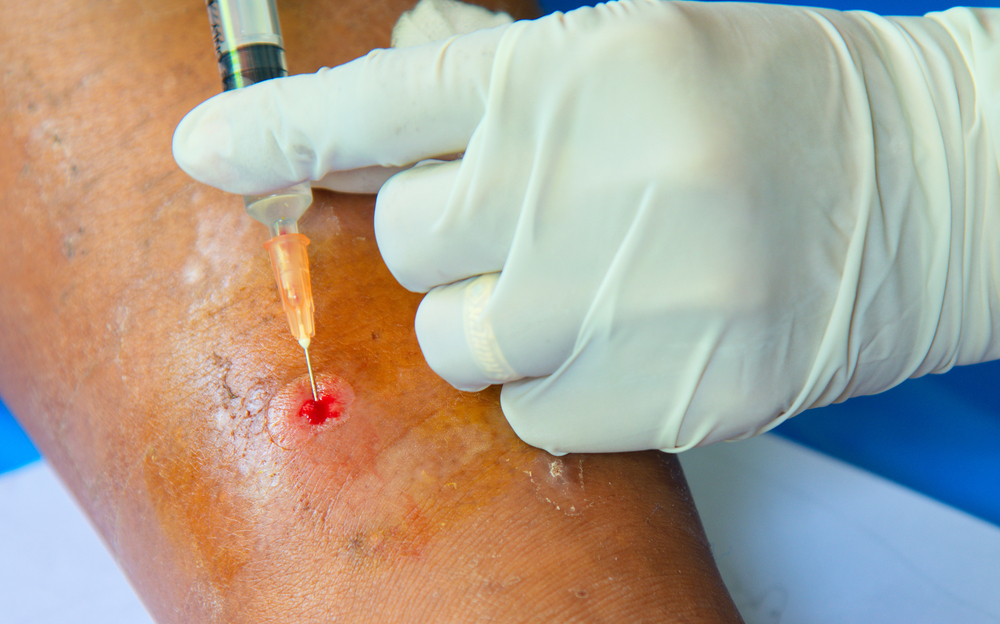
Diagnosis of a skin abscess can normally be done during a physical exam. Your doctor may be able to diagnose it just by seeing it and hearing your symptoms. The doctor may want to collect a sample of the pus to find out what type of bacteria is causing your abscess.
In cases where the abscess is internal or deeper that your doctor can physically see it as easily, they may need to run some extra tests. An ultrasound, CT scan, or MRI may help your doctor get a better look at where the abscess is and what it is effecting.
Treatment
If you have small abscess you can usually treat it at home. Applying a warm compress onto the abscess for 30 minutes 4 times a day. This can help shrink and drain the abscess. It is important to never try to squeeze the abscess to pop, and drain. This can either push the pus deeper into your tissue, or cause the bacteria to go deeper into your body. If you try to prick the abscess with a needle yourself you may either spread the bacteria, or prick a blood vessel accidentally which could cause more trouble.
If your abscess needs to be drained your doctor will be able to do this most likely in their office. They will use a local anesthetic that they rub on the abscess to numb the skin and the area. They will then take a surgical knife to cut a hole in the abscess to drain the pus. The doctor will then pack the wound usually with gauze. Everyday you will be instructed to pull a tiny bit of the gauze out of the wound so that the wound will heal from the inside out.
Depending on the severity of the abscess your doctor may need to prescribe you with an oral antibiotic. Pain usually will subside getting better each day. Abscesses usually heal within 10-14 days.
Abscess Complications
Left untreated they can be life threatening.
A recurrent abscess can be a sign of MRSA. MRSA or Methicillin-resistant Staphylococcus aureus infection is caused by a type of staph bacteria that’s become resistant to many of the antibiotics used to treat ordinary staph infections.
An abscess left untreated can cause cellulitis, sepsis, tissue death, endocarditis, spread of infection, or osteomyelitis. It is important to never let your abscess go untreated.
If it is small enough to deal with at home, make sure you apply the warm compresses to help with healing. If your abscess is larger than 1cm, you will want to reach out to your doctor for treatment assistance.
If you have a high fever over 103 degrees, you have any of the conditions that can raise your risk, or your abscess continues to grow you should seek medical attention immediately.
An abscess larger than 1cm need to be seen by a doctor. Never let an abscess go untreated! #HealthSurgeon
Sources:
https://www.webmd.com/a-to-z-guides/abscess#:~:text=A%20skin%20abscess%20is%20a,any%20place%20on%20your%20body.
https://jamanetwork.com/journals/jama/fullarticle/2677448#:~:text=Recurrent%20abscesses%20could%20be%20a,organized%20into%20a%20defined%20pocket
https://my.clevelandclinic.org/health/diseases/22876-abscess
https://www.healthline.com/health/skin-abscess#how-to-identify
https://www.mayoclinic.org/diseases-conditions/mrsa/symptoms-causes/syc-20375336