HealthSurgeon - Healthy Living and Fitness - Purium Coupon
Primary Navigation Menu
Baking Soda for Teeth Whitening: The Safe, Effective Way (Plus What NOT to Do)
Baking Soda for Teeth Whitening: The Safe, Effective Way (Plus What NOT to Do)
Baking soda has been used for dental hygiene for over a century, and modern dentistry actually backs its use — but with important caveats that most online guides get completely wrong. If you’ve seen tutorials recommending you scrub your teeth with a paste of baking soda, lemon juice, and salt, stop immediately. That’s dental damage disguised as a natural remedy.
Here’s what the evidence actually says about using baking soda for whiter teeth — the safe way.
The Baking Soda Basics
Sodium bicarbonate is a mild abrasive. On the Relative Dentin Abrasivity (RDA) scale, plain baking soda scores around 7 — well below the ADA’s safety limit of 250. For comparison, most commercial whitening toothpastes score between 70-180. This means baking soda is genuinely gentler than what you’re likely using right now.
The ADA recognizes baking soda for surface stain removal. Coffee, tea, and tobacco stains sit on the tooth surface, and the mild abrasive action of baking soda can physically remove those deposits over time. But here’s the critical limitation: baking soda does NOT bleach teeth. It won’t change your intrinsic tooth color or make teeth multiple shades lighter. It removes surface stains, revealing the natural tooth color underneath.
Important: baking soda contains no fluoride. It should never replace your regular toothpaste — only supplement it, a couple times per week at most.
The Lemon + Salt Method Is Dangerous
This combination circulates on social media and some “natural health” sites, and it should not. Here’s why it’s damaging:
Lemon juice is citric acid, which softens tooth enamel. Once the enamel is softened, the abrasive action of salt and baking soda strips away the weakened surface layer. The result isn’t whiter teeth — it’s thinner enamel, which reveals the naturally yellow dentin layer underneath, making teeth appear MORE yellow over time.
Worse, thinned enamel leads to sensitivity (hot and cold foods become painful) and increases cavity risk because the protective outer layer is compromised. This damage is permanent. Enamel doesn’t grow back.
If you’ve been using this method, stop now. Your priority should be protecting remaining enamel, not further stripping it away.
The Safe Way to Use Baking Soda
Here’s the technique backed by dental science:
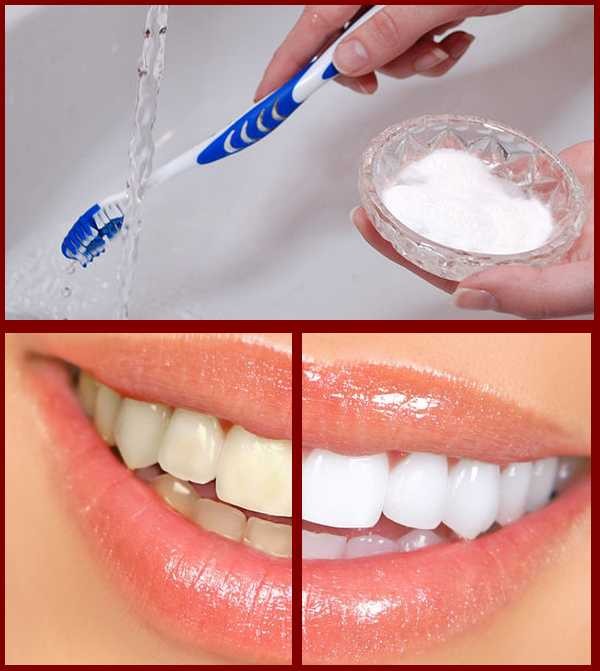
Wet your toothbrush. Dip it in about 1/4 teaspoon of baking soda (a tiny bit of water makes a paste). Use gentle circular motions for about 2 minutes. Rinse thoroughly with water. Follow immediately with your regular fluoride toothpaste.
Do this 1-2 times per week maximum. More frequent use isn’t better — even mild abrasives accumulate wear over time. Your daily toothpaste should be a fluoride-containing product; baking soda is a weekly treatment, not a daily replacement.
What Baking Soda Can and Can’t Do
Can: Remove surface stains from coffee, tea, and tobacco. Typically takes 2-3 months of regular use to see noticeable improvement. Works best as part of a complete oral hygiene routine.
Can’t: Whiten teeth beyond their natural color. Bleach teeth. Remove intrinsic stains (discoloration inside the tooth). Prevent cavities — in fact, without fluoride, it doesn’t protect against decay at all.
For more substantial whitening, ADA-approved whitening toothpastes (which contain both fluoride and mild abrasives like baking soda) are a safer starting point. Whitening strips with hydrogen peroxide work on intrinsic stains but should be used as directed — overuse can damage gums and increase sensitivity.
Supporting Oral Health From the Inside
Oral health starts with nutrition. Good gum health depends on adequate vitamin C and antioxidants — nutrients that support the connective tissues holding teeth in place. [asd_bio_fruit] provides a concentrated source of vitamin C and antioxidants that can support gum health and overall oral wellness.
Oral pH balance matters too. An overly acidic mouth environment can weaken enamel over time. [asd_more_greens] adds alkalizing minerals and chlorophyll to your diet, which can help support a healthier oral pH balance when used as part of a complete nutrition plan.
Don’t overlook coconut oil pulling — it’s an ancient practice with emerging research support. [asd_benefits_eating_coconut_oil] covers the science behind this simple technique for reducing harmful oral bacteria.
When to See a Dentist
If your teeth are sensitive, you notice gum bleeding, or you’ve been using abrasive home remedies for months, schedule a dental checkup. A professional cleaning removes tartar buildup that home care can’t touch, and your dentist can assess whether your enamel is in good shape.
This website uses cookies to improve your experience. We'll assume you're ok with this, but you can opt-out if you wish.AcceptRejectRead More
Privacy & Cookies Policy
Privacy Overview
This website uses cookies to improve your experience while you navigate through the website. Out of these cookies, the cookies that are categorized as necessary are stored on your browser as they are essential for the working of basic functionalities of the website. We also use third-party cookies that help us analyze and understand how you use this website. These cookies will be stored in your browser only with your consent. You also have the option to opt-out of these cookies. But opting out of some of these cookies may have an effect on your browsing experience.