HealthSurgeon - Healthy Living and Fitness - Purium Coupon
Primary Navigation Menu
Cure for Gout – How to Avoid Gout and How to Cure Using Home Remedies
“`html
Understanding and Managing Gout
Understanding and Managing Gout
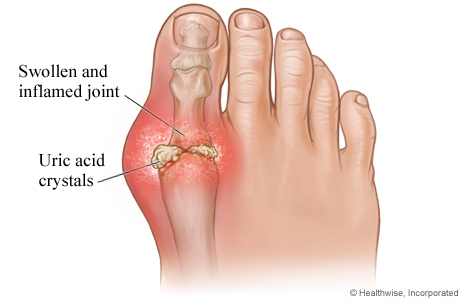
Gout is a common and ancient form of arthritis affecting approximately five percent of the world’s population at some point in their lives. It often manifests alongside other types of arthritis and commonly affects the big toe, resulting from a buildup of uric acid in the blood.
Normally, uric acid dissolves in the blood, is processed by the kidneys, and is eliminated through urine. However, when there’s an excess of uric acid, the kidneys may not be able to process it efficiently. This excess uric acid can crystallize and accumulate in the joint spaces, leading to gout.
A gout attack is characterized by intense pain and inflammation in the affected joints, typically lasting between 5 and 10 days. While it commonly occurs in the big toe, gout can also affect other joints, including the ankles, heels, knees, wrists, fingers, and elbows.
Who is at Risk for Gout?
Gout is more prevalent in men, particularly those in their 40s and 50s. Women are generally less susceptible due to hormonal factors, and gout is rare in children.
Risk Factors for Gout:
Age and Gender: Men between 40 and 50 are at higher risk.
Family History: A family history of gout (first, second, or third-degree relatives) increases your risk.
Overweight or Obesity: Excess weight contributes to increased uric acid production. Approximately 18% of gout patients are overweight.
Diet: Diets high in purines, found in foods like lentils, peas, sardines, anchovies, and red meat, can elevate uric acid levels.
Alcohol Consumption: Alcohol can also contribute to increased uric acid levels.
Certain Medications: Some medications can increase uric acid in the body.
Preventing Gout: Precautions You Can Take
Even if you’re in the higher-risk age group or have a family history of gout, there are preventative measures you can take to minimize your risk.
Preventative Measures:
Maintain a Healthy Weight: If you are overweight, reducing your weight through regular exercise is crucial. Aim for a healthy weight range appropriate for your height.
Eat a Sensible Diet: Limit consumption of purine-rich foods like red meat and lentils.
Moderate Alcohol Consumption: Avoid excessive alcohol consumption or keep it within recommended limits (e.g., under 21 units per week).
Regular Blood Pressure Checks: Have your blood pressure checked at least twice a year.
Managing Gout at Home: Home Remedies and Lifestyle Changes
If you’ve already been diagnosed with gout and are experiencing painful attacks, it’s essential to continue taking any medications prescribed by your doctor. Home remedies should be used in conjunction with, not as a replacement for, prescribed medical treatment.
The key to managing gout is to help neutralize uric acid levels in the body. Certain foods are believed to help control uric acid:
Foods That May Help Control Uric Acid:
Apples
Cherries
Mustard
Fish oil supplements
By making positive lifestyle changes, including dietary adjustments and weight management, you can effectively control your uric acid levels and potentially reduce the frequency and severity of gout attacks, and even prevent the onset of the condition.
This website uses cookies to improve your experience. We'll assume you're ok with this, but you can opt-out if you wish.AcceptRejectRead More
Privacy & Cookies Policy
Privacy Overview
This website uses cookies to improve your experience while you navigate through the website. Out of these cookies, the cookies that are categorized as necessary are stored on your browser as they are essential for the working of basic functionalities of the website. We also use third-party cookies that help us analyze and understand how you use this website. These cookies will be stored in your browser only with your consent. You also have the option to opt-out of these cookies. But opting out of some of these cookies may have an effect on your browsing experience.